Thursday, June 24, 2010

E-Portfolio Reflection

When our class set up our e-portfolio address at the beginning of the course, I was completely overwhelmed with our e-portfolio project. I did not know where to begin. I asked myself these questions:

· What information do I place in the portfolio?

· What is Linkedin?

· What do I put on the Skills Matrix and Tools page?

· What am I going to write on the Technology Philosophy page?

My questions were answered as our class progressed. The requirements began to become clear to me. Since our instructor helped us set up the required side bar items, the process of developing our e-portfolio website was simple. I didn’t feel I needed to use Inspiration as a mind mapping tool because the required items were set up in the side bar and the instructor’s directions were very clear.

As I continued to work on my e-portfolio, I realized I could spend countless hours adding additional information to this website. I was surprised that I really enjoyed developing my e-portfolio. Developing my personal wtebsite is one of the most enjoyable and practical applications that I will take with me from my class R503.

To view my e-portfolio website click here.

Wednesday, June 23, 2010

Group Vodcast Blog

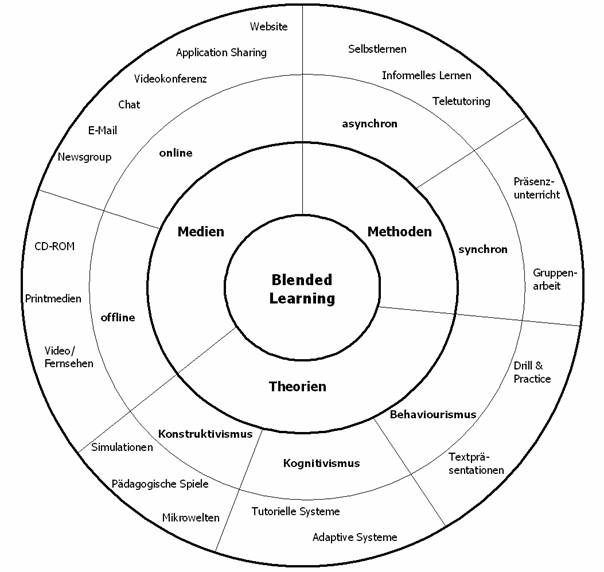
The rationale of our group vodcast was to collaborate and discuss thoughts about Blended Learning and Community of Learning. Our intended audience included parents, teachers, and administrators at our school. The purpose was to inform our audience of how blending learning integrates face to face learning with online technology, and also how the community of learning incorporates the social, cognitive, and teaching presences.

Link to iMovie: http://www.youtube.com/watch?v=MBhfWX_aBbM

My Reflection

Before my group began the iMovie project, I was very overwhelmed. As a group our first responsibility was to evenly divide responsibilities, which helped relieve some of my anxiety immediately. The people in my group included Emily, Kerry, and Nick. Our first task was for everyone to research content and images related to the topics of Blended Learning and a Community of Learning. As we researched, our findings were placed in a Google Docs document that we all shared.

As I reflect, I strongly believe the dividing of responsibilities had a great impact on the success of our project. Everyone had something to do and worked on tasks where some of us had strengths. Here’s the process:

· For planning purposes, I developed the FATP on our research page and Nick created a mind map using Inspiration.

· Kerry created a Research page on a Google Docs document where everyone in the group could document the research, images, and hyperlinks.

· Kerry and Emily were responsible for developing the script and adding the “acting” voices to the Garage Band software. The recorded voices in Garage Band were exported into iTunes.

· Nick and I were responsible for searching for images and downloading the images into iMovie. After each of us found an image, Nick downloaded the image to the desktop and then dragged it to iMovie. If a picture could not be downloaded, a screen shot was taken of the image.

· Nick matched the images to the script.

· I created a Reference page on a Google Docs document for both images and content.

· Emily added the credits and the image and content sources to our movie.

· Everyone in our group continued to search for images that related to the topic. We now have 43 images!!!

Teamwork:

I feel our team worked well together and the process went smoothly. As I reflect, I believe our teamwork improved for two important reasons:

· There was an even division of responsibilities. I found that I had much more to do on project four. Of course, project four involved images and project three did not involve pictures.

· Some image searching, movie editing, and research were done outside of class. This was important because it gave our group an added momentum to complete the project.

As I reflect on teamwork, I realized how important it is to complete tasks ahead of time. I have always been one to turn things in on time. However, with project four I made an effort to perform my tasks “ahead of time”, rather than “on time.” I believe the “ahead of time” philosophy is contagious and motivates other people. I envision myself using this philosophy more in my career.

Mind mapping/Flowcharts:

The FATP process and mind mapping using Inspiration continues to be a great tool for planning.

With a difficult project, mind mapping can prove to be very beneficial.

Tools and Applications:

I mentioned several tools and applications in the process section. I learned a great deal in doing this project. I realized how easy it was to do a screen shot on a MAC. I can see myself doing screen shots on my MAC at work. As you will read in my e-portfolio, I will be using Garage Band with my instrumental music classes, and I will be using Google Docs with my colleagues at work.

Creative Commons Statement 1-I only searched for images that were found under the website http://sites.google.com/site/edvibes/Home/projects/project-cc-2 , therefore, these pictures were Creative Commons images. There was only one exception and that was the “Pattern for Online Inquiry” image which was found under Google. The only reason I utilized it was because it was used on a slide for class.

Creative Commons Statement 2- Our music was selected under the Creative Commons website listed above.

CC statement 3 Emily created a Creative Commons license for our video.

Bibliography of hyperlink resources:

Research Content

Here are five out of seven!

http://en.wikipedia.org/wiki/Blended_learning

http://www.irrodl.org/index.php/irrodl/article/viewArticle/192/274.%20Accessed%2019th %20 March%202006

http://en.wikibooks.org/wiki/Blended_Learning_in_K-12/Blended_Learning_In_Grades_7-8.

http://www.inacol.org/research/promisingpractices/NACOL_PP-BlendedLearning-lr.pdf

http://www.sloan-c.org/publications/survey/pdf/k-12_online_learning_2008.pdf

Images

Here are 10 out of 43!

1. Computer 1

2. Computer 2

3. Computer 3

4. Students in Classroom

5. Blended Learning Kindergarten Classroom

6. Pedagogical Underpinnings for IC

7. Students’ Roles & Input/Output

8. Blended Learning Paradigm

9. Blended Learning Circle

10. Students on Computers

Wednesday, June 16, 2010

Group Podcast Project #3

Our group #1 had four people: Kelly, Emily, Nick, and Jeanine. First we followed the FATP guidelines where 1)the form was a podcast, 2)the audience was coworkers, administrators and parents, 3)the topic was 21st Century Skills and the Flat World, and 4)the purpose was a humorous and informative. Emily used Inspiration to create a mind map. As I reflect on mind mapping, I feel it is a great tool for planning. After the mind mapping is completed, the rest of the project seems to flow.

We divided the research. Nick and I researched the pros and cons of the topic “21st Century Skills and Emily and Kelly researched the pros and cons of the “Flat World.” Based on our research, all of us created questions and answers that we could incorporate into our script for a radio talk show. We all were creating humorous characters. Emily, Nick, and Kelly, and I were having fun throughout this process as we collaborated and brainstormed different ideas.

Nick and Emily worked on the podcast recording using Garage Band. They took jazz music from Creative Commons (CCmixter.org) and incorporated it into the podcast. Nick had prior experience with Audacity, so he was a great guide. When our class is over, I see great possibilities in using Garage Band in my music classes. I’m always looking for new music that will engage students in my instrumental classes and I see Garage Band as a great tool to accomplish my goal.

I felt Emily, Nick, and Kelly were great to work with-they were positive and contributed significantly to the making of our podcast. As I reflect upon the making of our podcast, I remember reading about the positive contributions group learning makes to education. http://en.wikibooks.org/wiki/Blended_Learning_in_K-12/Blended_Learning_In_Grades_7-8

Here are some bibliography hyperlink resources from our group podcast project. The first two links are from my research on 21st Century Skills.

http://www.britannica.com/blogs/2009/03/flawed-assumptions-undergird-the-partnership-for-21st-century-skills-movement-in-education/

http://blogs.edweek.org/edweek/curriculum/2009/09/common_core_steps_up_criticism.html

http://www.ascd.org/publications/educational-leadership/sept09/vol67/num01/21st-Century-Skills@-The-Challenges-Ahead.aspx

Here's a link to our podcast:

https://oncourse.iu.edu/podcasts/site/SU10-SB-EDUC-R503-12254

Tuesday, June 15, 2010

Podcast Blog

I subscribed to ITunes for my podcast. I googled K-12 educational podcasts, and I came across a website of educational podcasts from the University of South Florida. I subscribed to the website, "Technology in K-12 Lesson Plans". I listened to a pirate educational podcast which was appropriate for grades K-2. The format was a movie. The movie was arranged in a cooperative learning and informal style, and the students were involved in the entire learning process . The movie was organized in the following manner: 1) a student takes four pictures of the north, south, east, and west sides of the school. 2) Students make an I-movie of Petey the Pirate. The “pirate” was a young adult who stated, ”If you want to be a pirate just like me, you have to follow the map to the buried treasure.” 3) Students look for the treasure by hanging on to a rope where the distance from one student to the other was one yard. A teacher said this lesson was a cooperative learning experience where students worked together to measure distances to find the buried treasures. The techniques the producer utilized consisted of the following: 1) a short clip of the I-movie “Petey the Pirate,” 2) students unscripted actions and voices showing their cooperative learning experience, 3) teacher’s voice narrating the entire experience during the entire podcast. Here is the hyperlink to my source:

http://deimos3.apple.com/WebObjects/Core.woa/Browse/usf.edu.1273340511.01273340519

Sunday, June 13, 2010

Richard Baraniuk on Open Source Learning

Baraniuk says the books are expensive and create walls between the books and their readers. He states that digital books are shared and improved every 25 seconds, instead of updated every two years. I like Baraniuk’s perception. The average textbook is updated every two years in a global world that is changing by minutes, or even seconds.

Baraniuk talks about the “published on demand books” being much cheaper than a single author book. The middle man has been taken out of the equation. I’ve heard some colleges are allowing students to rent books rather than buy the books. Have they heard about “published on demand” books?

I enjoyed Baraniuk’s comments on Tech XML. He talks about “turning pages into lego blocks”. Learning is personalized for each student based on the context and each student’s language, learning style, and interest. The XML Technology Center offers assistance to develop all kinds of “XML based applications”. Here’s the website: http://www.oracle.com/technology/tech/xml/index.html

Toss the Traditional Textbook: Revamping a Curriculum

This article states that there are some advantages to having an online curriculum. One advantage is having varied and up to date materials. I remember a comment that the professional development picture writing instructor made at a workshop this past week at Perley. She analyzed a social studies book. In her opinion, the book was very “dry”, and had no voice since it was written by twenty one people. The topics in the book needed to be supplemented by other sources.

Another advantage of an online curriculum is that it could enhance the education of both students and teachers. “Best practices and lesson plans” could be shared by teachers. I think this is an excellent thought. I wish this sharing of ideas could be experienced more in the music area of my school corporation.

I did have a concern after reading this article. The risks of unregulated editing is mentioned, and also the hope of attracting the expertise of enough teacher to “police” the others. How can the regulation be accomplished? How can we make sure the online curriculum is meeting the standards?

Minds on Fire: Open Education, the Long Tail, and Learning 2.0

I felt this was a very good and informative article. Authors Brown and Adler stated that we live in a global world where we all need to “acquire new knowledge and skills on an almost continuous basis.” I agree with this perception. I worry that my children will go to school for a career that seems to have a future and after they graduate that career or job will be obsolete or have less demand.

The authors talks about the Open Educational Resources (OER) movement which encourages sharing and collaboration, and content which could be free, inexpensive, or have few limitations. Through Web 2.0 people are participating and collaborating through wikis, blogs, social networking, and virtual communities. The authors mention that the Web 2.0 supports “multiple modes of learning.” This is consistent with other articles I have read. These articles say that the internet supports different learning styles. As we all know, students learn in different ways, whether it is auditory, visual, kinesthetic, etc.

I especially found the “Closing the Loop” section of the article interesting. The authors mention that libraries, museums, and archives all store information, but are they reflective? Are they ongoing? Are they shared? Are they up to date? At one meeting at my school last week, one teaching mentioned the difficulty of finding books that everyone needed for children’s picture writing topics such as “Time of Day”, “Animals”, etc. I suggested a google docs document where teachers could input the title of the book they had used for a specific topic. The list would continue to grow as teachers shared their titles and information. Teachers could refer to the google docs list whenever they needed a book and continue updating the titles.